
This talk will cover Gus Bhandal, Marketing Strategist, LinkedIn Trainer, and founder of The M Guru, proven three-step strategy to find success on LinkedIn which can be implemented in less than 30 minutes a day.
Gus will cover community, content, and conversation, and how the three elements are all you need on LinkedIn. The focus is to make you efficient and effective on the platform.
Thank you so much. Thank you everyone. Afternoon. It is afternoon, isn’t it? So, as we all know, LinkedIn is the godfather of social media. I would say that I’m a LinkedIn trainer, so I know that LinkedIn is the best social media platform available. Now, obviously with all the others like Instagram and Facebook and all the rest of it, they’re good enough.
They do what we need to do. But LinkedIn is the only business focused platform. So here’s some incredibly boring stats for you. Started in 2002, blah blah blah. Microsoft bought it in 2016, which is the first massive change. And the second massive change was the pandemic. Sorry I couldn’t find a better image than a syringe for the pandemic. And then as of today, in 2025, we have 1.2 billion people on LinkedIn.
Now, again, boring stats. When the pandemic hit in 2020, there was roughly around 600 million users. And as of today, there are 1.2 billion users. So in the last five years, they’ve added as many users as they did in the 18 years before that. And the reason the pandemic has done so well for LinkedIn is because it’s where we now have conversations as where we speak to people.
It’s where we get to know others, build relationships, and ultimately find clients. So I always call LinkedIn the digital watercooler as the place, particularly in the pandemic where we went to speak to people to, we were scrolling our phones, we were all at home, we still wanted those professional conversations with our associates and our colleagues and our stakeholders and friends.
So we all went to LinkedIn. It became the digital watercooler. I won’t go into marketing strategy as such, but I will say that LinkedIn is the nucleus of any solid digital marketing strategy, and ultimately, it can be the bottleneck if you don’t get it right. So obviously when clients find you, they come into, they might search for you on Google, whatever you do for a living.
They might search for your company name, they’ll head over to your website. Think this is great. They’ll click on your social channels, which hopefully is LinkedIn, and they’ll say, I want to follow you on LinkedIn, etc. then if they really want to get in touch with you. They’ll sign up for your email marketing and then they’ll take it offline.
They’ll book a meeting, they’ll become a client, they’ll give you some money, etc., etc. however, LinkedIn is the bottleneck. If you don’t get LinkedIn right, they don’t do all of this stuff. They don’t follow up, they’ll think this guy is boring. I don’t like this guy. I don’t want to read his emails or book a meeting with him.
They’ll go and find somebody else. So particularly in any digital marketing strategy, LinkedIn is the nucleus.
Now, for those of you who don’t know me, I put my name in big letters. This is me and Gus Bhandal. I run a marketing agency called the M Guru. The M stands for marketing. Took me ages to come up with that. I run or I’m about to launch, imminently launching The Squeeze, which is a LinkedIn focused membership. I run LinkedIn Local with my very good friend Marianne, and I also run a LinkedIn conference called Uplift Live.
So essentially I do a lot of LinkedIn stuff. If LinkedIn died tomorrow, I don’t know what to do. Let’s not worry about that. So today what we’re talking about is the three C’s. See what I did there. The three C’s. I’ve only got 20 minutes yeah, keep up. Come on. So the three C’s of LinkedIn which are, I just worked out how to do animations on Canva as well.
So yeah. Community, content and conversation. This is what we’re going to be talking about today. So let’s kind of start with community. LinkedIn is the only place where you can curate your own audience. I’ve seen lots of people steal this quote, it’s my quote, that’s why I put my name on it very arrogantly. It’s mine, I tell people this and it’s because everywhere else Facebook, Instagram, Twitter, if anybody still uses that etc., people have to find you.
They have to find you. They kind of search. They find you etc. You have to tell people, I’m here, come and find me. On LinkedIn, you’re the one that curates your audience. The search box is your friend. You’re going to search box. You work out who your ideal client is, and you could type in anything you like physiotherapists, doctors, goat herders, whatever it may be.
There are 377 goat herders on LinkedIn, just so you know, don’t ask me how I know that. Just so you know, and I spoke at a conference a couple of weeks ago and somebody in the audience says, I’m a goat herder as well, but I’m not on LinkedIn. So I was like, oh, anyway, it’s a true story.
And so LinkedIn is the only place where you can create your own audience, and ultimately you’re creating a positive echo chamber of people that, in theory, should get to know you, like you, and trust you and eventually give you money. That’s kind of the point. So anybody know what a Boolean search is? Yeah. Of course Marianne, you would know, anybody else?
Yeah. So for those of you that don’t know just head over to Google and just type in Booleans LinkedIn. There’s a whole page about it. In essence, it’s how we hone our search. So when you go to the search box, you can type in accountants in Coventry or physiotherapists in Northampton or whatever it may be. And it’s a very generic search.
A Boolean search is where you kind of add keywords around it and put inverted commas around it. So it’s like the full phrase. So if you search for ‘business owner Northampton’ it will search for if you put inverted commas around it, it will search for anybody that has all three words in their profile, as opposed to anybody that has business or owner or Northampton, for example.
But go to Google, there’s a whole page on it. I used to do a whole workshop on this until I worked out there’s a page on LinkedIn all about this.
The maximum number of connections we’re allowed on LinkedIn is 30,000, which obviously is a massive amount. Does anybody know why it’s limited to 30,000? No. So.
There’s 1.2 billion people on LinkedIn. And because of the six degrees of separation, LinkedIn limit how many people you can reach. You can’t speak to all 1.2 billion people on LinkedIn unless you pay for LinkedIn. So your connections are limited at 30,000 because you can only reach a certain part of the audience. So if you pay more money, then you can reach everyone.
So actually the reason they restrict that is because they don’t want you reaching everybody on LinkedIn. However, it’s very unlikely people are going to get to 30,000 connections, right? Most of us take a long time to to get there, but ultimately what we want to do is connect to the right audience, curate the perfect audience, and obviously bring them into our world.
Now, ultimately, we want to create a community that gets to know us, like us, and trust us. And as we know, when people trust us, it’s all about trust transfer. I’ve got this quote I want to find people who look after my name when I’m not in the room. The idea is that you either find clients that buy from you, or you find people that will refer you to others.
So it’s where we find a network. So for example, hopefully everybody in here, we all connect to each other on LinkedIn. Whether we give each other money or not is a different matter. But if somebody says, oh, I need somebody that does this or I need somebody that does. If somebody says to you, oh, I need somebody that does LinkedIn, you say, oh, you should speak to Gus or Marianne or Ryan, you know, and it’s the trust transfer.
And obviously, ultimately when we create a community on LinkedIn, the purpose is to create one big, happy family. I don’t know who these are, I dunno. So it’s yeah, I probably need to find a better example to be honest. I was going to have the royal family, I thought nah forget that, much better. So when we talk about trust transfer, if somebody asks you for something, that person trusts you.
And if you trust the person you’re referring to, you will trust them. So you’re transferring trust. And that’s kind of what LinkedIn is all about. Also to find ideal clients, there’s loads of ways. Obviously we talk about the search box. The search box is your friend, but also people who engage with your content. When you look at somebody’s content next to their name, there’s a first or a second or a third.
If it’s a second, it means you have mutual connections. I always reach out to those people and say, oh, thanks for engaging with me. You know, let’s connect. People who follow you. So on LinkedIn, I won’t bore you with the details, but there’s either a connect button or a follow button. If you have a follow button on your profile, obviously you get followers.
I regularly go through my followers to see if anybody, any of them are relevant to me to connect to. People who viewed your profile. Slight caveat on that. They’re pushing that into the paid service now. So up until recently, you could see the last five people who viewed your profile. Now you can’t see any of them unless you pay.
So ignore that bit if you don’t pay for LinkedIn. Don’t forget your existing network. We spend all of our, and all LinkedIn trainers will say, oh, reach out to these new people and curate an audience and etc. etc. don’t forget the people who are already in your audience because they’re already essentially warm leads. They’re already people that want to speak to you, or the people that will help you to speak to others.
Okay. And for those of you that have company pages, and I recommend every business owner should have a company page on LinkedIn, go and look at your company page followers as well. I do my best work on my personal profile. So on my company page I head over there, I look at the people who are following my company page.
I say, listen, thanks for following my company page, but I don’t really hang out here. So connect with me over here. Now there’s something on LinkedIn that the background and algorithmic feature called the relevancy score. And ultimately it’s about raising the score with people. So if you go through your existing network and you think, oh, I haven’t spoken to this person for a while, it’s because you haven’t engaged with each other.
So it’s about increasing the relevancy score for the algorithm. So when you view somebody’s profile or send them a message or comment on their content, like their content, etc., etc., it’s raising that relevancy score. The higher the relevancy score with somebody, the more likely it is you’re going to see them. So I can say that about Marianne and Mel and Penni and all that kind of stuff,
people that you engage with on a regular basis, you’re more likely to see them in your feed. So if there’s people that you want to see and people that you want to connect to, make sure that you raise the relevancy score with them and vice versa, they will see your content. The more you engage with somebody, the more likely it is they’re going to see your content.
Speaking of content, I forgot this was the next slide. So only 5% of the 1.2 billion people on LinkedIn are posting content consistently. And as far as LinkedIn are concerned, that’s one post per week. So just by creating one post a week, and publishing it on LinkedIn, you fall into the top 5% of content creators out of the 1.2 billion people on LinkedIn, which is, when you think about it, it’s an absolutely ridiculous stat.
Yes.
Does that include reposting other people’s, sharing other peoples?
No, this relates to organic content. Yeah. Yeah. Because lots of people repost. That’s a great question. Lots of people repost content and reposting content is nice and easy. And there’s not, although there are algorithmic features about that, and they kind of, they notice who’s reposting, etc., etc.. It’s not a foolproof method because some people repost with thoughts and some people just click repost.
So it’s very much focused on organic content. So by creating one piece of organic content a week, you fall into the top 5% of content creators on LinkedIn. So, I have something I call the Famous Gus Bhandal, Daniel Craig content marketing strategy, which probably needs a better title to be honest. We all know Daniel Craig as James Bond, we all know that.
But Daniel Craig also in a vodka advert, I won’t name the vodka, I don’t know if it’s legally allowed, but anyway, if you haven’t seen that, not now, but later on, just head over to YouTube and just type in Daniel Craig vodka advert. It’s fabulous. It’s a far cry from James Bond. Right. Now 70% of my content is very personable content.
It’s very personality led content. It’s the content that I create that’s like Daniel Craig dancing in a vodka advert, dancing around like a loon. It’s personable. It gets engagement. It makes people laugh. It makes people think. It makes people engage with my content. 30% of my content is Daniel Craig as James Bond, ready for an assignment, suited and booted,
here’s what I do for a living, please buy my stuff. Now. This is a very arbitrary figure, but for me it’s 70/30, so 70% of my content is personality led content. 30% of my content is sales lead content and the sales lead content, I got to be honest, dies a death. There’s only so much you could tell people.
I’m a LinkedIn trainer. There’s only so much you could say that. But I get the residual engagement from the personality led content. So the idea is that you create content, and this is what a lot of people do now on LinkedIn, we create content that attracts an audience, that gets people to engage with us, gets people to talk to us, gets people to comment, etc. where we can respond to their comments or send them messages, etc., etc. and then when I post about work, I get the residual engagement from the engaged posts that then see my work related content.
So I start building an audience on my work-related content. The figure is arbitrary. It could be entirely up to you 90/10, 70/30, 60/40, whatever it may be. I almost forgot the numbers there, and it’s entirely up to you how you want to do it. But the important thing to know is don’t do 100% one way or the other.
Don’t only post jovial content because people won’t know what you do for a living. Don’t only post about work because eventually people switch off and they couldn’t care less, basically. So it’s a very much the personality led content and the work-related content. I’m not going to bore you to death with methods versus mediums, but in essence, the kinds of content that we can create, posts, document posts, which are essentially carousels.
I’ve grayed out audio rooms because I think they’ve gone. Yeah, yeah. So audio rooms, remember clubhouse? No. Yeah. Yeah. So it was like they brought this, LinkedIn being LinkedIn brought it to the world like three years later but it died a death. And I think they’ve kind of they’ve stopped them all together now. But anyway, articles, newsletters, videos, etc. regardless of what anybody tells you, including LinkedIn themselves, videos are shit.
They die a death on LinkedIn. A long story short, I messaged LinkedIn because I thought I was shadow banned, my reach was really low, etc. and they said no, it’s just probably your content. But what they did do was give me lots of advice and one of the things they said, they said, actually document posts are the best performing posts.
Now, I knew this, but LinkedIn obviously kind of said yes, document posts are outperforming video. Obviously it works differently for different people, but the purpose is is the whole dwell time algorithm. The longer somebody spends on your content, the more likely it is they’re going to see your next piece of content, and the more likely it is that LinkedIn are going to show your content to that person.
Now, the reason document posts or carousels, we have to call them document posts because it sounds professional, because it’s LinkedIn, you know. But essentially it’s where people scroll through content. It’s PDFs where people scroll through pages and the longer they spend. So does anybody know Dave Holland, world famous copywriter. Yeah, yeah. So he has carousel posts and they’re always funny.
And on most of the carousels there is either a single image or a word or something like that, and it’s like 50 pages, but you’ll read it to the end, and you read it to the end and so the next time Dave posts, I see that content because I’m engaging with that content. It’s a brilliant example of how to do carousel posts.
And so this is what LinkedIn says. So I always say mix it up. You know, text, photos, videos, posts, document posts, articles, newsletters, videos, etc. always mix it up, see what works best. But I recommend, if you don’t already create carousel posts on LinkedIn.
Answerthepublic.com, anybody heard of this? Yeah, I love this.
For free. Yeah, yeah. So it’s answerthepublic.com is so you get one search for free per day, then you get two more searches for free as long as you register. And then the fourth search onwards is yeah, you pay. But essentially you don’t need to do more than three searches a day to be honest. And I love answerthepublic.com because when you go in there, go to answerthepublic.com type in what you do for a living, and it will give you loads of questions of what people are asking on online live.
And it doesn’t just show you Google, it can now show you Amazon, Instagram,
TikTok, YouTube and Bing. But don’t worry about Bing. Nobody uses it, but everywhere else. So you can search what people are searching for on YouTube, Amazon, Google, etc. etc. it will give you loads of questions which then forms the basis of your content. So if there’s a question that says, for example, can marketing jobs be done remotely? If that was, if I was going to write marketing content, I would take that,
that would be the title, write a post about it etc. Very easy to find LinkedIn content using tools like this. I won’t tell you to take that title and put it into ChatGPT and write a blog for you. I won’t, I don’t do that. I don’t tell people to do that. I also recommend covering absolutely covering your LinkedIn profile with keywords.
This is part of your content strategy to bring people into your world. If anybody’s making notes and you’re going to use the acronym of C.H.E.F.S H.A.T, just make sure you put the space after the ‘S’ and not before it. So, thanks, I make that joke so often. Essentially you should have keywords. So my keywords are LinkedIn Training, Digital Marketing Strategy, social media.
So I put it in my content, in my headline, in my experience section, in my featured section, in my skills and in my about section. Don’t worry too much about hashtags now, hashtags are slowly being deprecated on LinkedIn, but they still work. So as of today, they still work. I use hashtags to essentially get people to find my content, or if I have a content series, etc..
The only place you can’t put keywords is testimonials, but I normally ask for testimonials and I’m very kind of prescriptive about them in terms of hey, I did some LinkedIn training for you. I hope you enjoyed the LinkedIn training. Would you like some more LinkedIn training? If you’d like to write me a testimonial about LinkedIn training, please write it on LinkedIn.
And normally the subliminal messages, they’ll probably use the phrase LinkedIn training. So that’s kind of the point. So this is everywhere that you put your keywords. Now. And the third stage is conversation. Now again it’s about conversing with others. When we curate an audience and create content that they want to read, we are engaging with one another, liking each other’s content, commenting on content, etc. and LinkedIn still has the best algorithm in terms of when you comment on somebody’s content that content features in somebody else’s feed, you will still see oh, Gus Bhandal has commented on Penni’s content, etc. it still works on LinkedIn.
So it’s still, you’re finding new people, and new people come into my world because I see other people commenting. For those of you that are connected to Mel Barfield, you will know she comments on everything, my whole feed is full of posts, Mel has spoken, people spoken, but it brings loads of fabulous people into my world.
Mel’s fabulous. She knows loads of fabulous people and brings fabulous people into my world. And I think that’s the important thing. That’s one of the best things about LinkedIn and particularly about the conversation element. It is what I say the world’s biggest and longest networking event. It’s been around since 2002, so I don’t know any networking events since then.
Comments are king. Now. Again, when I contacted LinkedIn and they said your content is rubbish, essentially the advice that one of the pieces of advice they gave me was long form comments work best. So rather than stuff like thanks for posting, thanks for sharing, great post, all that kind of stuff. Meaningful lengthy comments work the best. And actually, I don’t know if you’ve noticed now, but under comments you get impressions.
How many people have seen that comment itself? Most of my comments get more reach than my posts. Yeah, yeah, it’s ridiculous.
Right.
I get comments that do 10,000 impressions.
Yeah, exactly.
Yeah. And it’s picking the right people to engage with. But actually also it’s a great way, so LinkedIn are pushing that out. And that’s why again it’s a great algorithmic feature that if we have conversation. So the point is it’s not just a place to broadcast. It’s not just a place to, oh here’s our content, hopefully somebody will read it.
So like a real life networking event, we converse with people. Now LinkedIn themselves have said they’re prioritising comments right now, hence why they’ve added impressions at the moment on the comments. So when you engage with people and you curate the perfect audience, go and engage with their content. When you engage with their content, hopefully it brings more people into their world and obviously vice versa into your world.
Just looking around, none of you are old enough to remember Adrian Mole? I don’t believe you. I don’t believe anyone. Now. Adrian Mole I always talk about, so particularly to garner conversation. So I didn’t know whether to put this in content or conversation because actually, it’s a mix of both. I always recommend journaling your week.
I always recommend at the end of each week just write, you know, on Monday I saw a new client. Tuesday I got a testimonial. You know, Thursday I went to Cowork Crew. Friday I had pizza in the office. Whatever it may be, right? Journal your week. Because what it does is it gets people into your world and it resonates with an audience, which then garners engagement.
So whenever I say, oh, I did this, I did that, you know, just talk a lots about work and then interspersing with, oh, I had a pizza or I went to watch the football. Somebody will always say, oh, what toppings do you like? Or what football team do you support, etc. they couldn’t give a shit about the work stuff I’ve written but gets people into the audience and it gets people to converse.
For example, great content. This is something, so I was on a podcast, the Anna Bravington kind of created this. I love it, and I was like, I’ve got to share this. It’s amazing, I love that. But she was talking about a podcast and it was all about like content creation. You know, people like, hey, you know, posting about her dog and like the fact that it’s a great September day and it’s not just like, oh, this is what I do for a living.
This is actually like a post feed featuring a dog, for example. Then of course, we have Marianne talking about volunteering at the rugby, which was fabulous while she was hobbling around on one leg and all that kind of stuff. But the World Cup, was it? Yeah, yeah. For example. She’s a LinkedIn trainer, but she’s talking about rugby and volunteering because she loves rugby etc.
And then of course we have Penni. Great screenshot with the wonderful James Sandbrook there, talking all about self-employed life and you know, making the life that you want to create. And then we have obviously the wonderful Mel Barfield with the God tiered meme. Absolutely, this is, absolutely made my day this is, I mean, not the fact that she passed away,
that’s very sad, but the meme. Absolutely fabulous. But again, it’s not like Mel is a copywriter, this is a meme. It’s like garnering engagement, it’s having conversation. People are talking. This got like 61 likes, 7 comments, people are reposting it, etc., etc. it’s all about creating content that people will engage with to garner that conversation.
So the next time when Mel says, oh, by the way, I’m a copywriter, somebody will say, oh, that’s great. They’ll know that it’s that residual engagement. Right. Now I have a fourth bonus C, which is confidence. Now, most people I speak to, a lot of people I speak to, a lot of kind of a large portion of my clients will always say, I’m not confident posting on LinkedIn.
I don’t want to talk about myself. What if my ex-husband sees it? What if my old boss sees it, etc. etc. and I always say if they’re not paying your bills, their opinions don’t matter. It’s as simple as that. And particularly if we’re not confident somebody else is, if we’re not posting somebody else is, if we’re not engaging with people, somebody else is.
And ultimately it’s usually your competitors. So you have a whole presentation about this, about being intentionally you, all marketers will say be yourself. Everyone else is taken. All I got a nonsense, but I had the word intentionally because it’s about leaning into the kind of person that you are. Everybody can be themselves. It’s very easy to be yourself, but actually your quirks, your jokes, your humor, what makes you tick, the kind of life that you lead.
Share it on LinkedIn. Talk about those stories, everything that you’re doing. Like I showed Mel and Marianne and everybody else. It’s about the stuff that is really intentionally you, which brings an audience to you. And ultimately, when we’re creating content about ourselves, we counteract AI. Yes, people use AI. I have nothing against AI. I think it’s great, but obviously used sparingly and used kind of in the right sense.
But obviously what we don’t want to do is create content that makes us sound not human. I was going to say inhumane. That’s not right. We don’t want to be artificial. This is all about real people connecting to real people, taking the real-life conversations online. So ultimately, hopefully you all know your place in the market.
You know exactly who you are. You know your place in the market, you’re going to use LinkedIn to tell your story. And ultimately, you’re creating a motion in the audience that you are curating. Every person that you connect to, everybody that sees your content, you’re raising an emotion in them, whether they like you, whether they hate you. Hopefully everybody likes you.
But whatever it is, you’re creating an emotion. The reason people follow you is because they want to hear more from you. So I’m sure everybody here is on LinkedIn. I’m sure everybody here has more than one follower. So if you’re not creating content, you’re doing them a disservice. If you’re not engaging with them, you’re doing them a disservice.
They have bothered to follow you because they have that emotion that they want to connect to you. So if you know your place in the market, you tell your story about your place in the market. It creates an emotion in your ideal clients.
The social selling index score. Anybody check their score recently? A few people.
It’s gated behind Sales Navigator.
No. It’s free. It’s always been free. Now yes, it’s part of Sales Navigator, but it’s open to everybody. So if you for example, the best thing to do is on a desktop. If you open up your laptop, connect to LinkedIn, open up a separate tab and just go to LinkedIn.com/sales/ssi which stands for Social Selling Index, this is available to everybody.
This is essentially your metrics to show that you’re doing well on LinkedIn. So what I would do is if you don’t use LinkedIn that much, today go to your social selling index, take a screenshot, write it down exactly what your score is today. Then go on, have conversations with people. Sorry. Create a community. Have conversations with people. Create great content and you will see,
check this score in three months’ time the score will go up. It’s based upon four components, etc. you can obviously check it yourself. And I’m not just sharing this because I’m in the top 1% of everything. Just so you know, I’m in my team, top one of one in my team. Yeah, yeah, what a nonsense metric.
But anyway, the social selling index always worth scoring. Always worth checking sorry. A score roughly around 68 to 80 is a great score. Basically. Anything over 80 I’m pretty sure you went to Photoshop, so I’ll know. So yeah, check out your social selling index. It’s free for everybody. And when it comes to LinkedIn and digital marketing and social media, does anybody know what the most important metric is?
Fun.
Fun.
Yeah.
I should have said that. Damn, I said money. But anyway. So fun. Yeah, let’s have fun while we’re making money. Now ultimately, yes. Ultimately your LinkedIn has to work for you. It’s all very well having a massive audience. It’s all very well kind of speaking to people all day. If it’s not making you money, then you’re doing something wrong.
LinkedIn, ultimately, and social media and digital marketing, and the reason we’re in business is ultimately to make money. Okay.
Compendium is another word for summary, but I didn’t use the word summary because obviously we’re doing the alliteration. So in summary in compendium that probably doesn’t, anyway, whatever. Community, build a community, curate the perfect audience, create great content that they would want to read. Make sure you nurture your audience by having conversations with them and make sure you have the confidence to share what makes you unique, what makes you special, and the emotions that you’re creating in your audience.
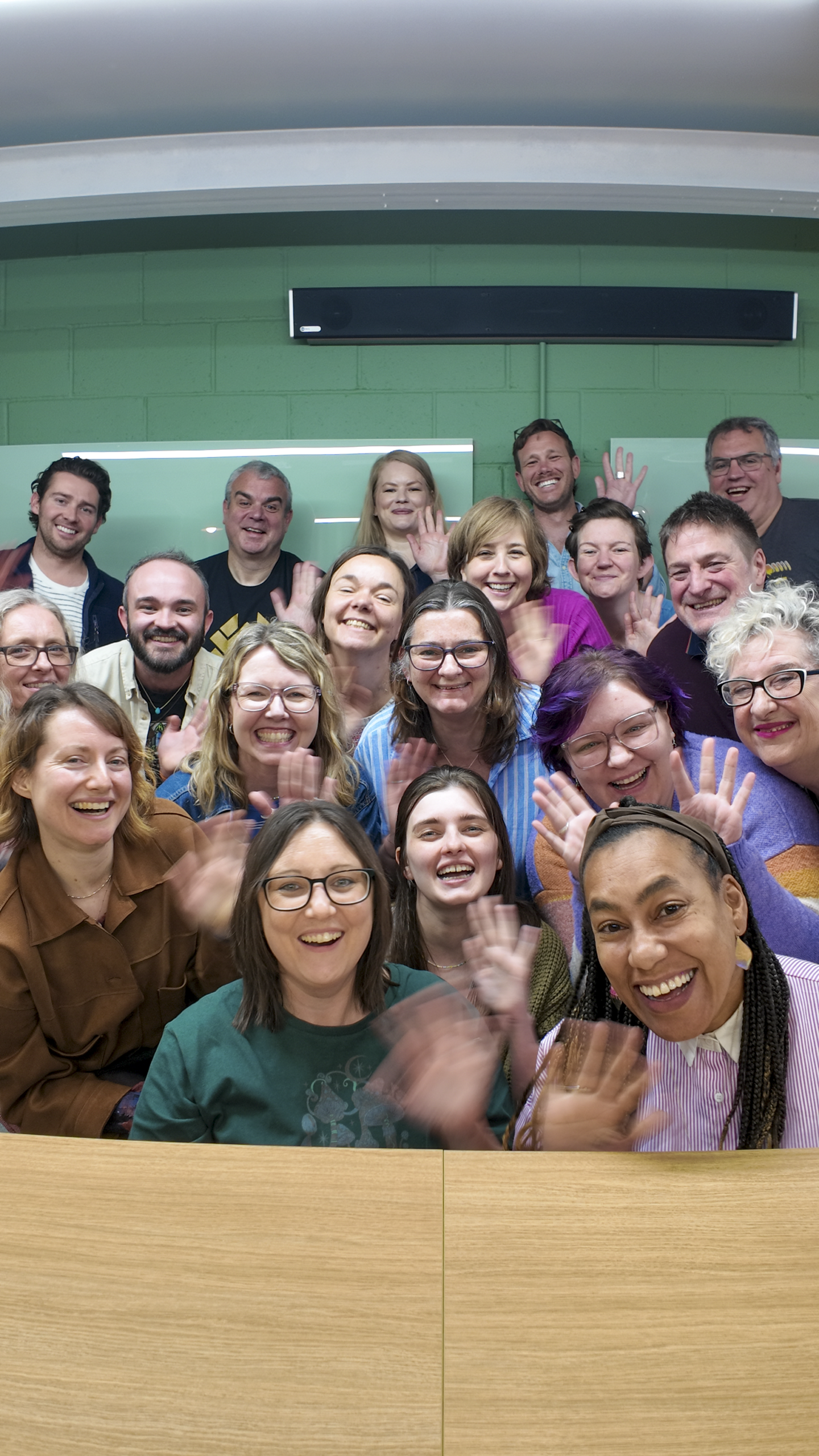
Now almost the last slide. So homework, write about today. Write a post if you haven’t already. Share a screenshot, take some photos, tag me and definitely tag the Cowork Crew. And feel free to use the hashtag The Three C’s so we can all see each other’s content when we search for that hashtag. And obviously, if anybody hasn’t taken any screenshots today.
Feel free to use this one. So ladies and gentlemen, that’s me. Thank you so much.
Thanks.
Sophie Blackmore
Why I wrote a book I really really didn't want to sell
Thursday 19 November
Grab your cowork day tickets earlier and for half the price of non clubhouse members.
Commit on a Monday, check in on a Friday - a little accountability goes a long way!
Weekly eat-that-frog sessions, monthly LinkedIn Planning - it's easier to get through the hard stuff with others.
Share what you do and where you are so your crew mates can find you.
Client problem? Work wobble? Big win? Share it and solve it, or celebrate it with your crew.